How to Get a Good Breastfeeding Latch (Step-by-Step Guide)

A good latch is one of the biggest factors in whether breastfeeding feels comfortable—or painful.
If feeding feels uncomfortable, frustrating, or inefficient, the latch is often the first place to look.
The good news: small adjustments can make a big difference.
What a Good Latch Looks Like
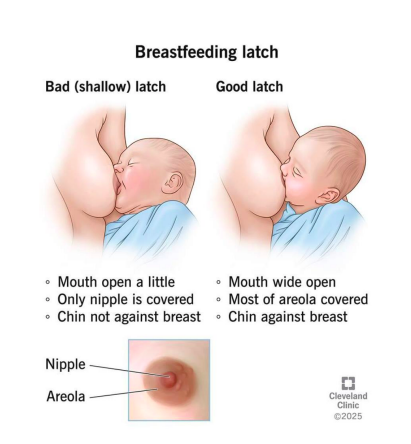
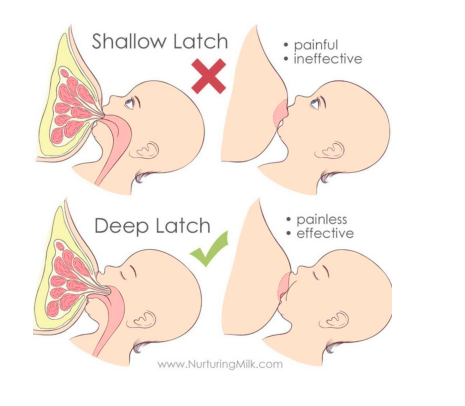
A “good” latch means your baby has taken in enough of the breast—and not just the nipple—to feed effectively and comfortably.
Signs of a Good Latch
- Baby’s mouth is wide open before latching
- Lips are flanged outward (like a fish)
- Chin presses into the breast
- More areola is visible above the top lip than below
- Baby’s cheeks are rounded, not sucked in
- You feel a pulling sensation, but not sharp pain
A deep latch helps your baby transfer milk efficiently—and protects your nipples from damage.
Why Latch Matters So Much
Latch affects almost everything in breastfeeding:
- Comfort → A shallow latch often leads to pain
- Milk transfer → A deeper latch helps your baby get enough milk
- Milk supply → Effective removal signals your body to produce more
- Feeding efficiency → Better latch = shorter, more satisfying feeds
If you’re experiencing pain, it’s worth understanding what’s considered normal breastfeeding pain and what might need adjusting.
Step-by-Step: How to Get a Better Latch
1. Start with Positioning
Before latching even happens, positioning sets up the foundation.
- Keep your baby chest-to-chest with you
- Ensure ears, shoulders, and hips are in a straight line
- Bring baby to breast—not breast to baby
Good positioning makes a deep latch much easier to achieve.
2. Align Nose to Nipple
Position your nipple at your baby’s nose level—not directly in the mouth.
This encourages your baby to:
- Tilt their head back slightly
- Open their mouth wider
3. Wait for a Wide Mouth (Gape)
This is one of the most important—and most rushed—steps.
Wait until your baby opens their mouth wide (like a yawn) before bringing them onto the breast.
4. Bring Baby in Close
When the mouth is wide:
- Bring your baby in quickly and gently
- Aim the nipple toward the roof of the mouth
This helps your baby take in more of the lower part of the breast, creating a deeper latch.
5. Check and Adjust
Once latched:
- Is there pain beyond the first few seconds?
- Do the lips look flanged outward?
- Does your baby seem settled?
If something feels off, it’s okay to gently break the latch and try again.
Signs of a Shallow Latch (What to Watch For)
A shallow latch is one of the most common causes of breastfeeding pain.
Look out for:
- Pinching or sharp pain
- Clicking sounds during feeding
- Baby slipping off the breast
- Nipples coming out flattened or compressed
- Baby feeding for long periods but still unsettled
If you’re experiencing these, it’s worth addressing them early before discomfort builds.
Common Latch Challenges (and What Helps)
1. Baby Won’t Open Mouth Wide Enough
Try:
- Ticking baby’s upper lip with your nipple
- Waiting a few extra seconds for a full gape
2. Pain Beyond Initial Latch
Pain that continues usually means:
- Latch is too shallow
- Positioning needs adjustment
Repositioning often helps immediately.
3. Baby Keeps Slipping Off
This can happen if:
- Baby isn’t close enough
- Support is lacking
Try using pillows or adjusting your hold for better stability.
4. Engorgement Making Latch Difficult
If your breasts are very full:
- Your baby may struggle to latch deeply
Try:
- Hand expressing a small amount before feeding
- Softening the areola to help baby latch more easily (reverse pressure softening helps – 3 fingers pushing gently but firmly into the areola until it softens)
5. Possible Oral Restrictions (e.g. Tongue Tie)
If you’ve adjusted latch and positioning but still experience:
- Persistent pain
- Clicking sounds
- Difficulty maintaining latch
It may be worth having your baby assessed by a trained professional.
When to Get Help
Many mothers are told to “just keep trying.” But breastfeeding shouldn’t feel like guesswork.
Consider getting support if:
- Latch is consistently painful
- You’re unsure if your baby is feeding effectively
- You notice nipple damage
- Feeding feels stressful rather than manageable
Having your latch checked by an IBCLC—either in the hospital or soon after you return home—can make a significant difference in both comfort and confidence.
A Reassuring Perspective
Learning to latch is a process—for both you and your baby.
It doesn’t mean you’re doing anything wrong if it doesn’t feel natural right away.
Often, it’s not about trying harder—but about making a few small adjustments that change everything.
By BOSOM Editorial Team
The BOSOM Editorial Team creates parent-centred, evidence-based content developed in partnership with maternal health experts.
Reviewed By:
Nabila Hanim, IBCLC
International Board Certified Lactation Consultant
Date: May 2026